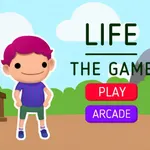







Life: The Game
Life: The Game Simulation Mechanics
| System Component | Technical Parameters |
|---|---|
| Developer | Ohmaigawd |
| Genre | Simulation / Minigame Collection |
| Input Method | Point-and-Click / Mouse Interaction |
Have you ever wondered if you could optimize the chaotic trajectory of human existence? Life: The Game offers a unique, often hilarious perspective on the human experience, breaking down the milestones of our journey into bite-sized, high-stakes minigames. As a player, you are thrust into a series of rapid-fire challenges that demand split-second decision-making.
Navigating through Life: The Game requires more than just luck; it demands a deep understanding of the underlying logic governing each stage. From the frantic initial moments of birth to the complexities of adulthood, Life: The Game forces you to adapt to new rulesets constantly. The simulation is not about realism, but about capturing the absurdity of common human hurdles.
Mastering the Early Developmental Stages
The journey begins with the most literal interpretation of survival. In Life: The Game, players are tasked with managing the delicate balance of an infant's needs. You must click precisely to ensure the baby survives the initial environment, setting the tone for the rest of the experience. Each stage in Life: The Game acts as a puzzle, requiring you to identify the primary objective within seconds.
If you fail to act, the consequence is immediate: a restart. This cycle of failure and iteration is the core of Life: The Game. Players must learn to parse visual cues quickly, as Life: The Game rarely provides explicit tutorials, opting instead for intuitive, context-based interaction. You will find yourself repeating these levels until your muscle memory takes over.
Pro-tip: Do not overthink the visual cues. Most challenges in Life: The Game rely on simple drag-and-drop or timing mechanics that become obvious once you stop looking for hidden complexity.
Educational Loops and Reflexive Challenges
Beyond the simple survival mechanics, Life: The Game integrates educational elements that test your cognitive speed. Whether it is solving basic math problems or identifying objects, Life: The Game keeps the brain engaged. The difficulty curve in Life: The Game is non-linear, often spiking during social simulation levels like dating or exam-taking.
To succeed, you must maintain a consistent rhythm. Life: The Game rewards players who can switch between different interaction modes—from clicking to dragging to timed releases—without hesitation. Many players find that Life: The Game becomes significantly easier once you stop treating it as a standard simulation and start viewing it as a rhythm-based reflex test.
- Birth: Managing initial survival inputs.
- Childhood: Rapid-fire educational and social puzzles.
- Adulthood: Balancing career, relationships, and complex decision trees.
- Final Stages: Reflections and concluding the journey.
The Architecture of Human Progression
The structural genius of Life: The Game lies in its variety. By isolating specific moments of the human lifecycle, the developers created a format that prevents boredom. Every level in Life: The Game feels distinct, which is a major achievement for a browser-based simulation. The transition between a school exam and a complex dating scenario in Life: The Game keeps the pacing tight.
Because Life: The Game uses such a simple control scheme, the challenge rests entirely on your ability to recognize patterns. You are essentially speedrunning the human experience. As you progress deeper into Life: The Game, the time limits become more aggressive, forcing you to optimize your cursor path for every single movement.
Navigating Social and Professional Milestones
Social interactions in Life: The Game are arguably the most humorous part of the experience. The game mocks the awkwardness of dating and the stress of professional life through exaggerated, fast-paced minigames. In these stages of Life: The Game, you must read the room (or the screen) to avoid social blunders that end the level prematurely.
Professional milestones in Life: The Game often involve multitasking. You might be asked to type, sort files, or manage a boss’s demands, all while a timer ticks down. Life: The Game succeeds here by creating a sense of urgency that mimics the pressures of real-world career advancement. If you can master these, you are well on your way to completing the full simulation.
Sandbox Freedom and Replayability
While Life: The Game is structured as a linear progression, the replay value is high. Because each level can be completed in multiple ways, players often return to Life: The Game to experiment with different outcomes. The game does not penalize you for failing; it encourages you to try again and find the optimal solution.
Ultimately, Life: The Game provides a sandbox of human existence that is both rewarding and entertaining. By focusing on the mechanics of each stage, you can unlock the full potential of your virtual character. Whether you are a casual player or a speedrunner, Life: The Game offers a unique experience that stays with you long after you have finished your first playthrough.
Frequently Asked Questions About Life: The Game
How can I beat the difficult dating levels in Life: The Game?
To succeed in the dating stages of Life: The Game, you must focus on the timing of your clicks. Watch the reaction of the character on screen and time your interactions to match the rhythm of the conversation. If you miss the window, the level resets, so patience is key.
Why does Life: The Game feel so fast during the exam level?
The exam level is designed to test your ability to process information under pressure. In Life: The Game, the trick is to ignore the distracting background elements and focus solely on the input required for the math or logic puzzle. Once you isolate the target, you can react much faster.
Is there a trick to the birth sequence in Life: The Game?
The birth sequence is the first hurdle in Life: The Game. You must click and hold or drag precisely to move through the birth canal. Do not rush; move steadily to avoid hitting the walls, which triggers an immediate level failure.
Wrapping up, Life: The Game is a masterclass in minimalist design. It proves that you do not need complex graphics to create a compelling experience. By stripping away the fluff, Life: The Game allows you to focus on the core gameplay loop: observing, reacting, and repeating. If you are looking for a game that challenges your reflexes and makes you laugh, Life: The Game is an essential addition to your library.
The simplicity of the controls in Life: The Game makes it accessible to everyone, but the difficulty of the later levels will test even the most seasoned veteran. Keep grinding, keep clicking, and you will eventually master every stage of Life: The Game. It is a journey that is worth every single retry, offering a unique perspective on the highs and lows of our collective existence.
Finally, remember that Life: The Game is meant to be fun. Do not let the time limits discourage you. Every failure in Life: The Game is just a lesson in what not to do next time. Stay focused, stay sharp, and enjoy the ride through this brilliantly crafted simulation of life's many unpredictable stages.