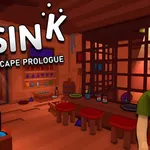








Sink It
Sink It: Mechanical Telemetry and System Specs
| Metric | Data |
|---|---|
| Developer | Dashmetry |
| Input Method | Single-key (Spacebar) |
| Core Mechanic | Physics-based Ballistics |
| Genre | Arcade / Skill |
Sink It is a deceptively simple title that hides a brutal learning curve beneath its colorful, pirate-themed exterior. As an octopus captain, you are not just firing blindly; you are managing a complex series of environmental variables that change with every single frame.
In Sink It, the engine calculates real-time wave physics, meaning your platform is never stable. Understanding these baseline metrics is the only way to progress through the increasingly difficult stages of Sink It.
The Physics of the Ocean
The core of Sink It relies on a deterministic physics engine that treats every shot as a unique trajectory calculation. You must account for the vertical displacement of your ship caused by the swells. If you ignore the motion of the water in Sink It, your projectiles will consistently miss their mark.
Success in Sink It requires you to treat the screen as a grid of shifting values. The game demands that you internalize the timing of the waves rather than just reacting to the targets themselves.
Sink It: The Deceptive Calm of the High Seas
When you first load up Sink It, the game lulls you into a false sense of security with slow-moving targets and calm water. This is a classic design choice meant to make you comfortable before the difficulty spikes.
The early levels of Sink It are designed to teach you the rhythm of the spacebar input. You might think you have mastered the game, but Sink It has a way of introducing chaotic variables just when you feel invincible.
Pro-Tip: Do not fire at the target's current position in Sink It. Instead, calculate the intersection point where the target's path meets your projectile's arc, accounting for the ship's current wave-induced elevation.
Identifying the Hidden Traps
The real danger in Sink It comes from the environmental hazards that move independently of your shots. While you are busy lining up a perfect trajectory, the game modifies the sea state, making your stable shooting platform rock violently.
Experienced players know that Sink It is not a game of speed, but a game of patience. You must wait for the perfect window of opportunity, even if it means missing a potential shot to reset your timing in Sink It.
If you find yourself failing repeatedly, it is usually because you are rushing your inputs. Sink It punishes impatience by widening the variance in your ballistics, leading to missed treasure chests and lost progress.
Sink It: Navigating the Perils of Ballistic Physics
To truly conquer Sink It, you must understand the relationship between the spacebar press and the resulting muzzle velocity. The game engine uses a fixed force for every shot, making the angle and timing the only variables you can control.
Mastering this requires practice. You need to develop an intuitive sense of how long it takes for your projectile to travel from your ship to the target in Sink It. This is the fundamental truth of the game loop.
The Mechanics of Instability
Your pirate ship in Sink It is constantly bobbing. This movement is not just cosmetic; it changes the starting coordinates of every shot you fire. To be successful in Sink It, you must learn to time your spacebar press to coincide with the ship's peak or trough.
- Time your shot at the peak of a wave to gain extra height for long-range targets in Sink It.
- Wait for the trough if you need a flatter, more direct trajectory for close-range shots.
- Always prioritize the movement of the target over the movement of your ship.
By controlling your output in Sink It, you can mitigate the randomness of the physics engine. It is about turning the chaos of the sea into a predictable pattern that you can exploit.
Sink It: Mastering the Rhythmic Muscle Memory
The final hurdle in Sink It is developing the muscle memory required for high-level play. After hours of firing your cannons, the timing for the spacebar press should become subconscious.
You stop thinking about the waves in Sink It and start feeling them. This is the flow state that separates casual players from those who can clear the hardest levels without losing a single life.
Refining Your Tactical Approach
As you progress in Sink It, the targets start moving in complex patterns. They might oscillate, change speed, or hide behind obstacles. You must adapt your strategy in Sink It to account for these shifts.
Timing is everything. If you find your shots consistently falling short, adjust your anticipation. Precision is the key to unlocking the rarest treasures. Consistency in your rhythm will eventually lead to victory in Sink It.
Never rely on luck. Even when a shot seems impossible, there is a mathematical solution within the game engine of Sink It. Stay focused on the rhythm, and the ocean will eventually yield its bounty to you.
Frequently Asked Questions About Sink It
How can I stop missing my shots when the sea is rough in Sink It?
To improve your accuracy in Sink It during rough seas, you must synchronize your spacebar press with the wave cycle. Do not fire randomly; observe the ship's oscillation and only launch your projectile when the ship is at a stable point in its movement arc.
Is there a trick to hitting the fast-moving treasure chests in Sink It?
Hitting fast targets in Sink It requires leading your shot significantly. Since the projectile speed is constant, you must calculate where the chest will be in half a second, rather than where it is currently, and time your shot to meet it at that destination.