






Run 2
Run 2: The Gravity-Defying Gauntlet
| Metric | Data Specification |
|---|---|
| Developer | Joseph Cloutier |
| Core Loop | Gravity manipulation, platforming |
| Total Levels | 62 Stages |
| Primary Engine | Flash-based physics |
Stepping into the digital void of Run 2 feels like a fever dream of geometry and speed. As a veteran gamer, I have seen countless twitch-platformers, but few capture the sheer kinetic energy of this classic title. In Run 2, your primary objective is simple: keep moving forward while the world rotates around your feet.
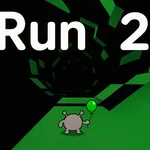
The core of Run 2 revolves around constant forward momentum. You are not just running; you are navigating a series of three-dimensional tunnels that refuse to stay upright. To master Run 2, you must treat every surface as a potential floor, wall, or ceiling.
Key Insight: Success in Run 2 relies on internalizing the gravity-shift mechanic, where jumping onto a side wall instantaneously reorients your entire perspective.
Mastering Spatial Awareness
Spatial awareness is the silent killer in Run 2. Because the camera shifts aggressively, players often lose track of their absolute position within the tunnel.
To survive in Run 2, you must focus on the center of the screen. If you focus too hard on the edges, the rapid rotation of the environment will cause motion sickness and missed inputs.
Character Dynamics: Runner vs. Skater
Choosing your avatar in Run 2 is not merely a cosmetic decision. The Runner offers high stability, making them perfect for beginners learning the ropes of Run 2.
The Skater, however, is built for speed. If you are aiming for high-score runs in Run 2, the Skater is your best bet, provided you can handle the increased inertia. Consider these tips for choosing your character:
- Use the Runner for tight, platform-heavy levels where precision landing is vital.
- Select the Skater when a level in Run 2 features long, straightaways that reward velocity.
- Switch characters frequently to see which physics profile fits your personal playstyle.
Navigating the Impossible Geometry of Run 2
The level design in Run 2 is a masterclass in psychological warfare. Developers often place gaps exactly where your muscle memory expects a platform to remain stationary.
When playing Run 2, you will notice that the environments begin to fracture. These gaps are not just obstacles; they are invitations to test your reaction time against the game's strict engine constraints.
Precision Hitbox Management
The hitboxes in Run 2 are unforgiving. Clipping a corner often results in an instant reset, which is why mechanical precision is the only path to the end-game content.
Pro-tip: Do not hug the edges of the tunnel. In Run 2, the safest path is almost always the center of the platform to maximize your reaction window for sudden wall shifts.
Many players fail in Run 2 because they panic during the transition sections. When the path ahead looks like a sheer wall, you must trust the gravity shift mechanic to pull you through.
The Art of the Wall-Shift
Mastering the wall-shift is the defining skill for any Run 2 expert. You are not jumping over gaps; you are jumping onto the side of the tunnel to effectively turn the wall into your new floor.
This maneuver is what makes Run 2 so unique. By chaining these jumps, you can navigate complex, spiraling corridors that would otherwise be impassable in a standard 2D platformer.
Sensory Overload and Rhythmic Precision in Run 2
The sound design and visual pacing of Run 2 work in tandem to create a trance-like state. As you progress, the background music intensifies, matching the increasing complexity of the courses.
If you find yourself stuck, try muting the game. Sometimes the audio cues in Run 2 can actually distract from the raw visual input required to survive the later, more chaotic levels.
Visualizing the Tunnel Flow
Top-tier players of Run 2 do not react; they anticipate. By observing the pattern of the tiles, you can predict where the next gravity-shift platform will appear.
When you enter a new level in Run 2, take a moment to scan the horizon. Look for the color-coded platforms that indicate safe zones versus the treacherous holes that await the unwary.
Auditory Cues for Success
While some suggest muting, others argue that Run 2 is a rhythm game in disguise. The sound of your character hitting the surface creates a cadence that helps you time your jumps.
By finding this rhythm, you can clear entire sections of Run 2 without conscious thought. It is the ultimate expression of flow state gaming, where your fingers and the screen become one.
Frequently Asked Questions About Run 2
How can I unlock the secret double jump ability in Run 2?
To unlock the double jump in Run 2, you must be a completionist. You need to collect every single white bonus orb hidden across all 62 levels. Once you have achieved this, head back to the main menu and interact with the question mark icon to enable this game-changing ability.
Is there a specific strategy to survive the hardest levels in Run 2?
The best strategy for the most difficult levels of Run 2 is pattern memorization. Do not rely on reflexes alone. You must learn the exact sequence of jumps for each level, as the game's difficulty curve is designed to punish those who try to improvise their way through the complex tunnels.
Ultimately, Run 2 remains a pinnacle of browser-based platforming. Whether you are a casual player or a speedrunner, the depth of mechanics provided by Run 2 ensures that there is always a new challenge to overcome. Keep pushing, keep shifting, and master the tunnels.